





Registration closes: 27 November 2026 | Online session: 20 January 2027 | Participation: free
Bridging the Horizon is a free online partnership-building programme for organisations with relevant cancer expertise. Register your capabilities and partnership needs, connect with organisations working on complementary solutions and explore potential roles in European consortia.

Horizon Europe collaborations often depend on finding the right partners early enough to shape a credible proposal. Bridging the Horizon brings together call insight, structured capability mapping and facilitated introductions.
The programme is open to organisations in the UK, EU and Horizon Europe Associated countries. This includes universities, research institutes, NHS and clinical organisations, cancer centres, companies of any size, charities, patient organisations, funders and specialist delivery partners. You should have a clear capability relevant to at least one target topic and be ready to explain the role you could play in a consortium.
The programme also welcomes organisations working on the environmental and place-based drivers of cancer risk, from contaminated land and urban planning to soil monitoring, remediation and nature-based solutions.

A focused overview of the selected 2027 Cancer Mission topics and the partnership implications.
A short practical guide to forming Horizon Europe partnerships and presenting organisational capability.
Placement in a call/capability cohort based on the registration information provided.
A networking opportunity and the ability to present your capabilities in the format provided.
Targeted introductions to relevant European contacts where a credible match can be identified.
Light-touch follow-up and signposting after the webinar.
13 MAY 2025
We are inviting food innovation leaders to join a focused roundtable on proteins, microbes and biotechnology open calls, in collaboration with Earth Alliance; a unique initiative to boost climate innovation through international collaboration between Sweden, Finland, Singapore, Austria and Israel
27 MAY 2025
Join an exclusive roundtable focused on Mobility open calls, designed for specialised organisations and innovators. In collaboration with the Luxembourg Trade and Invest Office, build your next partnership and submit a Europe-Luxembourg-Israel consortium.
TBD
More 2025 Round Tables Information Coming Soon
We invite highly specialized Energy entities from Europe and Israel to participate in a round table to increase their chances of winning Horizon Europe grants.
TBD
More 2025 Round Tables Information Coming Soon
We invite highly specialized Culture & Creativity entities from Europe and Israel to participate in a round table to increase their chances of winning Horizon grants.
Complete the short registration form.
We review responses and map organisations by topic, capability, desired role and partner need.
Registered participants join an online session with call insight, partnership guidance, and breakout introductions.
We will follow up with light-touch support and, where useful, facilitate follow-up introductions after the session.
Bridging the Horizon round tables since 2021
Participants in Bridging the Horizon since 2021
Horizon Europe open calls presented
Horizon Europe submissions
Winning bids
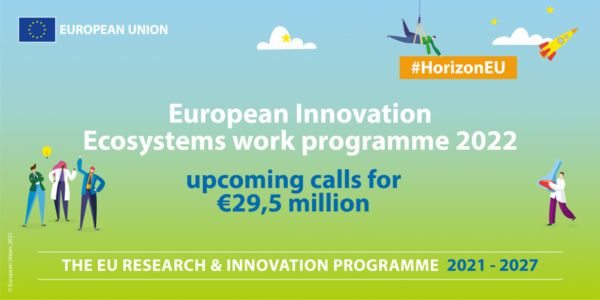

IFIE, Bridging the Horizon participant, and consortium partners – GSG – UK, FAIR – France, SIA – Italy, MAZE – Portugal – have been selected to receive funding from the EU HORIZON European Innovation Ecosystems (EIE) program to advance SDG-driven Innovation Ecosystems. The project aims to support and finance comprehensive research and formulate a strategic roadmap.
The EU Delegation to Israel is the official representative of the European Union in Israel.
ISERD is the Israel-Europe R&D Directorate, an inter-ministerial directorate established by the Israeli Ministry of Economy
This programme is seeking registrations of interest for the below six 2027 Horizon Europe topics. The calls are expected to open in February 2027 and close in September 2027.
Indicative total budget across the six topics: €136.32 million.
Type: RIA
EU contribution/project: €7–8m
Research, genomics, target discovery, biotech
Deadline date: 16 September 2027
Read more
Type: IA
EU contribution/project: €7–10m
Cancer centres, clinical research, infrastructures
Deadline date: 16 September 2027
Read more
Type: RIA
EU contribution/project: €7–9m
Clinical trials, biomarkers, rare cancers, therapeutics
Deadline date: 16 September 2027
Read more
Type: RIA
EU contribution/project: €5-7m
Health economics, systems, outcomes, patients
Deadline date: 16 September 2027
Read more
Type: PCP
EU contribution/project: €8-10m
Public procurers, health systems, medtech and industry
Deadline date: 16 September 2027
Read more
Type: RIA
EU contribution/project: €12m
Living labs, soil pollution, carcinogenic substances, human cancer risks
Deadline date: 21 September 2027
Read more
A pre-paid consultation with an expert of Horizon is available for consortia that have an initial proposal and project layout prepared following the Bridging the Horizon roundtables.
No. Participation is free.
The form helps us check relevance and organise useful cohorts. We aim to include all relevant organisations, but cannot guarantee a curated introduction or a place in the matchmaking session.
No. You may be looking for a consortium, seeking specific partners, or offering a capability to teams already forming.
No. It offers light-touch partnership building and signposting. NCP support remains the route for authoritative call and participation guidance.
No. Consortium decisions sit with participating organisations, and Horizon Europe funding decisions sit with the European Commission.
Participants will leave with a vetted network of potential partners, a deeper understanding of the technical requirements of the selected calls, and professional feedback on their project concepts to strengthen future submissions.
Participation is free of charge for selected applicants. However, it requires a significant commitment to the consortium-building process and active participation in the scheduled session.
The Health not The Death is a fundamental human right. A healthy population is not to be seen as human and social capital, an input, or by-product, towards economic growth. Alongside a healthy and sustainable environment, a solidarity, a healthy population must be the ultimate goal especially nowadays in helping Ukrainian migrants with cancer and their families.
Solidarity in health is a cornerstone of EU health policy. There are wide disparities in many health outcomes across the region and those outcomes. The access rules dramatically affect healthcare systems which are at the forefront of the migrant way, the people who are searching for help and the way how we could enhance and support their healthier and wellbeing status.
In order to ensure their access to care and continued cure in need, the probability of receiving a timely diagnosis and of surviving differs greatly from country to country where they are now. There is lack of information, help and inequalities in access. People need help in navigating cancer knowledge, diagnostics, secondary monitoring and prevention, way of treatments, and care.
Shifting our mindset, supporting healthcare connectivity, removing inequalities overall across Europe is our mission and even more now in a time of crisis, helping the Ukrainian people dealing with cancer is a good place to begin this transformative revolution.
1) Whether we have a chance to foster more holistic and integrated approaches to receive information and care, by supporting coordination and maximising an enabling and health-enhancing effect of care across services from different countries?
2) Whether actions should address the social determinants of health, the countries where they are now, the health need which they have, the social and language barriers are the conditions which have to be taken into consideration in a coordinated manner?
How might we improve patients and /or people who seek healthcare support, access to healthcare services at an EU & the Member States Healthcare systems level? Especially in a time of crisis in Europe.
How might we support refugees fleeing from their countries by navigating them to medical centres to receive best available care?
Precision medicine aims to personalise care for every individual. Nongenomic and genomic determinants, combined with information from patient symptoms, clinical history, and lifestyle (nutrition, physical activity, stress etc.), can facilitate personalised diagnosis and prognostics. Yet this goal requires access to massive amounts of data which may come from different structured and unstructured sources; these can be our medical records, laboratory testing, a range of medical devices as well as from the patient himself. AI & ML can combine input from these multiple sources, analyse them and identify biomarkers that can support health professionals make more informed decisions. The convergence of precision medicine with the advanced AI capabilities will improve the ability to personalise care – improve diagnosis, risk prediction as well as therapy planning.
HCPs want to better predict treatment response, given uncertainty around which treatment to prescribe to which patient and when to prescribe. How do we risk assess the patients, match them with the right treatment (personalised). How can we transform the wealth of data and link it to the predictive nature of how the patient will respond?
Being diagnosed with cancer is overwhelming and comes as a blow. Patients may feel on a roller coaster of emotions—they are scared, lost & confused not knowing what to expect, who to refer to, what to do and how to tell their loved ones. They directly refer to “Dr. Google” to look for information about their disease, possible treatments, QoL strategies with the aim to have better understanding of their disease and learn how to better cope with their disease & treatment, yet information is not always valid, accessible, nor personalised or tailored to the patient’s status and needs therefore left with huge amounts of non-relevant information. Coming to the doctor, the physician’s time is limited and mostly focusing on the physical aspects of the disease & treatment, not leaving much time to ask questions nor discuss more holistic aspects of the disease such as emotional, psychological, social aspects. The patient (& caregiver in many cases) leaves the room with unanswered questions, doesn’t remember much of what has been said, and feels he is not heard, nor seen as a whole.
The need for navigating this journey along the emotional psychological stress is overwhelming & patients and their caregivers look for support (case manager/companion/partner) to help manage their disease holistically – starting from having clarity around their disease and treatment by having access to reliable and personalised information during their journey as well as having an integrated holistic care system , supporting them and their loved ones to navigate through the different aspects of their disease – medical, emotional, logistical, psychological, social, rights.
How can we support patients to navigate through the complexity of their disease and treatment ensuring they have validated holistic information about their disease journey & treatment and be empowered to effectively manage their care
As medical events pivoted from conference centres and meeting rooms to the virtual settings, learning opportunities continue. Lectures and presentations are translated to the new digital world, yet the ability to connect and network is relatively lost. Peer interaction is essential not only for information exchange but to share practical insights, allows consultation & in-person experience cross country and across borders leading to better disease management.
This peer-based learning/ consultation is highly valued amongst practising clinicians and was generally achieved when HCPs and KOLs met their peers in national & Intl conferences, group debates, advisory boards and even during quick corridor conversations. Attempting to replicate these in-person experiences into the digital space creates challenges and are not effective nor impactful as face-to-face engagements.
How might we improve HCP medical exchange enabling physicians to easily communicate, consult, exchange opinions leveraging individual experts & centres of excellence knowledge, experiences, and practices?
How can we leverage the technological expertise to allow HCPs to connect with leading experts across countries to get advice / counselling for their cases?
Application for 2022Calling2Scale is closed.
Interested in participating in the next cohort?
Email maayan.sharon@eithubisrael.eu
Connect & Experience offers more than training. The C&E community network is an active EU online and offline community offering easy access to opportunities, curated content, matchmaking, soft landing services, and support. The community provides a space for community builders from Europe and Horizon Europe associated countries to interact, share best practices, and collaborate to enhance your startup community.