
News

Why India, why now, and how to start without getting burned

Why India, why now, and how to start without getting burned

Share

By Kiran Gange, Global Launch Base, with Gernot Schwendtner, Upvisor
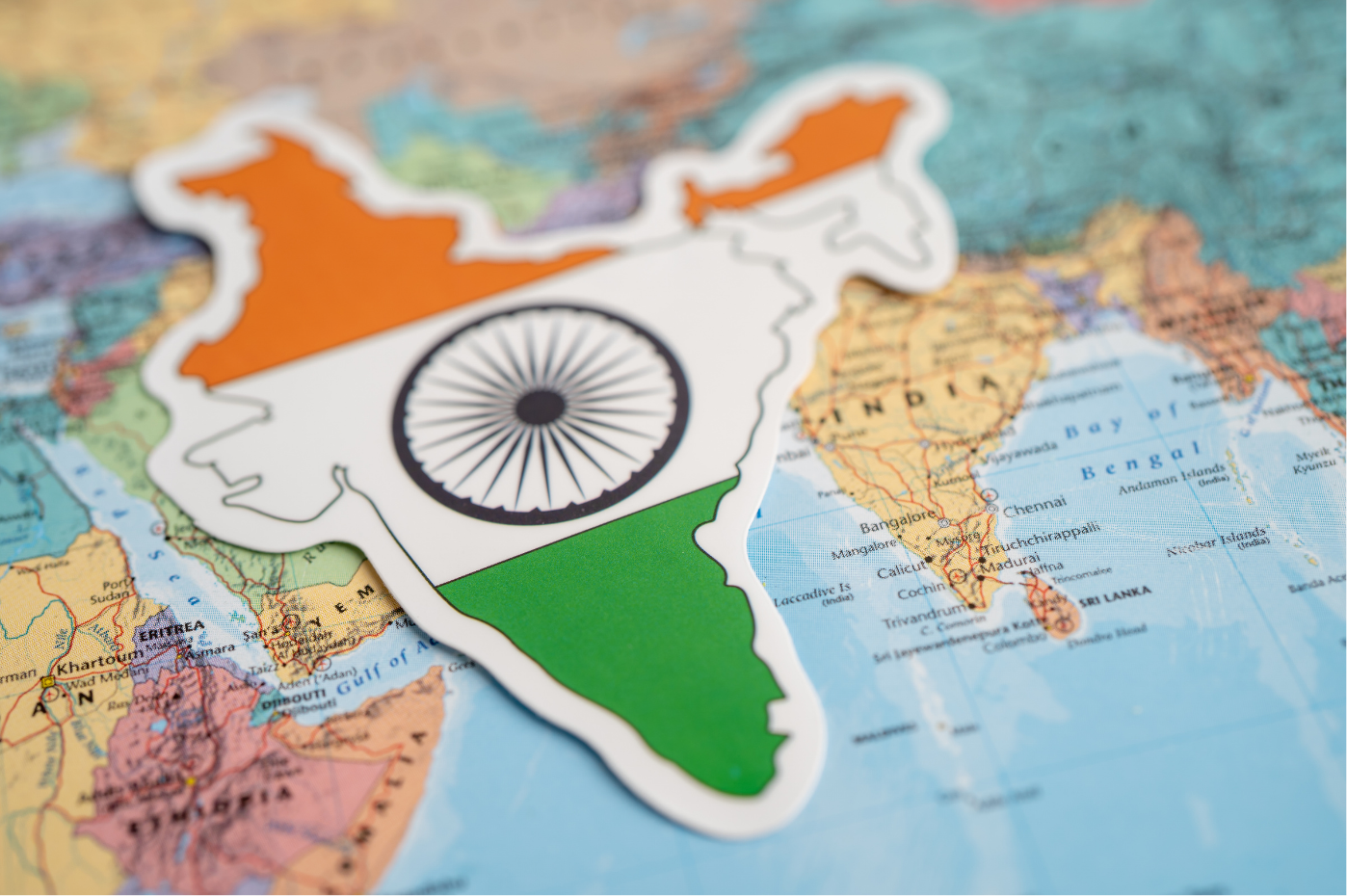
Map of India in the colours of the Indian flag

Picture a crowded city where a new playground has just opened. Whoever turns up can start playing. That is India for European food and agri companies right now.

Why now

In the last two or three years, India has leapfrogged whole stages of technology instead of crawling through them. Payments are the clearest example: UPI, India’s instant payment system, handled 25.47 billion transactions in October 2026 alone. In big Indian cities I can get almost anything delivered in under ten minutes.

Agriculture is moving the same way. Land records are being digitised, and more than 103 million farmers now have a digital Farmer ID linked to them. Market data that used to be impossible to find is now available, there are digital platforms for start-ups to build on, and the rules on certifications and data use are easier to navigate than they were.

The ground is ready. The question is how to step onto it.

What the winners do

The European companies doing well in India rarely do everything themselves. They work with local distribution partners who handle business development and know the market’s strengths and weak spots.

European brands start with an advantage. Quality and trust still worry Indian consumers, and many will happily pay more for a food or agri product from Europe, where regulation is strict. Where European companies struggle is everything around the product: negotiation, flexible contract terms, and fast, personal customer support. That is normal business practice in India, and a local partner already does it.

Distribution is local too. Every state is different, and business often runs through networks of people who have traded together for generations. One distributor will not cover the whole country.

I know a European carbon fibre manufacturer that won customers like Tata, Reliance and Hero Motors this way. Local salespeople and distributors opened the conversations, and the European brand came in only at the final stage. The company brought the technology and let partners handle the selling, consulting and support.

How to start: your first 90 days

Go where the rubber meets the road. Spend time with the people who will use your product and make the buying decision, in their real setting. Don’t start at the top: what you see in a boardroom is often not what happens on the ground.

Say you make drones that spot crop disease. On the ground you might find the voltage swings so much it burns out your batteries. Average farm size may look healthy while the median tells a very different story. There is dust to handle, and rats that chew through wires. In food processing, you might build a plant and find that stray dogs barking all night keep your on-site workers awake.

You won’t discover any of this top-down. So run a pilot on the ground straight away with a real user, free or at low cost if you must. Get usage numbers and a case study before you go to investors, government or a bank, and before you open an office.

Where OPEN India comes in

OPEN India is a free series of four live online sessions for European start-ups and scale-ups, run by Upvisor and Global Launch Base for EIT Food. Each session brings in a guest expert who works in India.

  • 20 Nov: Where does your solution fit? Where demand sits and which state to start in, with Amit Mishra.
  • 27 Nov: How do you get started? Entry routes, finding partners and a realistic first six months, with Abhijit Goswami.
  • 4 Dec: What should you prepare for? Rules, contracts, IP and data, with lawyer Shraeyas Jayasimha.
  • 11 Dec: How do you gain traction? First customers, pilots and pricing, with Giuseppe Galimberti.

All sessions run on Fridays, 14:00–15:30 CET, in English.

The playground is open. Come and see where your company fits.
Five mistakes European companies make in their first year in India, from trusting online market data to pricing like in Europe, and how to avoid them.
EIT Global Outreach is pleased to share with you an update on our latest activities, opportunities and news.
Calling2Scale Gunma is an EIT Global Outreach initiative, launched in partnership with the Governor of Gunma’s office to fast-track the market entry of European startups in Japan.

You may also be interested:

Five mistakes European companies make in their first year in India, from trusting online market data to pricing like in Europe, and how to avoid them.
EIT Global Outreach is pleased to share with you an update on our latest activities, opportunities and news.
Calling2Scale Gunma is an EIT Global Outreach initiative, launched in partnership with the Governor of Gunma’s office to fast-track the market entry of European startups in Japan.
EIT Global Outreach is proud to share the official notice of the European Commission regarding the launch of its new Hub in the UK.
The Committee on the Internal Market and Consumer Protection (IMCO) deals with EU legislation in the categories of free movement of goods and services, customs and consumer protection. EU Parliament officials, including vice presidents, met with us and other leading organizations to explore Israel’s regulatory environment and digital sector.

search

Full access to the community network

Connect & Experience offers more than training. The C&E community network is an active EU online and offline community offering easy access to opportunities, curated content, matchmaking, soft landing services, and support. The community provides a space for community builders from Europe and Horizon Europe associated countries to interact, share best practices, and collaborate to enhance your startup community.

SHOW MORE
To read the full report, please enter your email.
 
*For the best experience, we highly recommend reading the report on your desktop and not your mobile.
To read the full report and receive a link to download it, please enter your email.
 
*For the best experience, we highly recommend reading the report on your desktop and not your mobile.

Access to Healthcare

The Health not The Death is a fundamental human right. A healthy population is not to be seen as human and social capital, an input, or by-product, towards economic growth. Alongside a healthy and sustainable environment, a solidarity, a healthy population must be the ultimate goal especially nowadays in helping Ukrainian migrants with cancer and their families.

Solidarity in health is a cornerstone of EU health policy. There are wide disparities in many health outcomes across the region and those outcomes. The access rules dramatically affect healthcare systems which are at the forefront of the migrant way, the people who are searching for help and the way how we could enhance and support their healthier and wellbeing status.

In order to ensure their access to care and continued cure in need, the probability of receiving a timely diagnosis and of surviving differs greatly from country to country where they are now. There is lack of information, help and inequalities in access. People need help in navigating cancer knowledge, diagnostics, secondary monitoring and prevention, way of treatments, and care.

Shifting our mindset, supporting healthcare connectivity, removing inequalities overall across Europe is our mission and even more now in a time of crisis, helping the Ukrainian people dealing with cancer is a good place to begin this transformative revolution.

1) Whether we have a chance to foster more holistic and integrated approaches to receive information and care, by supporting coordination and maximising an enabling and health-enhancing effect of care across services from different countries?

2) Whether actions should address the social determinants of health, the countries where they are now, the health need which they have, the social and language barriers are the conditions which have to be taken into consideration in a coordinated manner?

How might we improve patients and /or people who seek healthcare support, access to healthcare services at an EU & the Member States Healthcare systems level? Especially in a time of crisis in Europe.

How might we support refugees fleeing from their countries by navigating them to medical centres to receive best available care?  

SHOW MORE

Predictive Treatment

Precision medicine aims to personalise care for every individual. Nongenomic and genomic determinants, combined with information from patient symptoms, clinical history, and lifestyle (nutrition, physical activity, stress etc.), can facilitate personalised diagnosis and prognostics. Yet this goal requires access to massive amounts of data which may come from different structured and unstructured sources; these can be our medical records, laboratory testing, a range of medical devices as well as from the patient himself. AI & ML can combine input from these multiple sources, analyse them and identify biomarkers that can support health professionals make more informed decisions. The convergence of precision medicine with the advanced AI capabilities will improve the ability to personalise care – improve diagnosis, risk prediction as well as therapy planning.  

HCPs want to better predict treatment response, given uncertainty around which treatment to prescribe to which patient and when to prescribe. How do we risk assess the patients, match them with the right treatment (personalised). How can we transform the wealth of data and link it to the predictive nature of how the patient will respond?

SHOW MORE

Patient Journey Navigation

Being diagnosed with cancer is overwhelming and comes as a blow. Patients may feel on a roller coaster of emotions—they are scared, lost & confused not knowing what to expect, who to refer to, what to do and how to tell their loved ones.  They directly refer to “Dr. Google” to look for information about their disease, possible treatments, QoL strategies with the aim to have better understanding of their disease and learn how to better cope with their disease & treatment, yet information is not always valid, accessible, nor personalised or tailored to the patient’s status and needs therefore left with huge amounts of non-relevant information. Coming to the doctor, the physician’s time is limited and mostly focusing on the physical aspects of the disease & treatment, not leaving much time to ask questions nor discuss more holistic aspects of the disease such as emotional, psychological, social aspects. The patient (& caregiver in many cases) leaves the room with unanswered questions, doesn’t remember much of what has been said, and feels he is not heard, nor seen as a whole.

The need for navigating this journey along the emotional psychological stress is overwhelming & patients and their caregivers look for support (case manager/companion/partner) to help manage their disease holistically – starting from having clarity around their disease and treatment by having access to reliable and personalised information during their journey as well as having an integrated holistic care system , supporting them and their loved ones to navigate through the different aspects of their disease – medical, emotional, logistical, psychological, social, rights.

How can we support patients to navigate through the complexity of their disease and treatment ensuring they have validated holistic information about their disease journey & treatment and be empowered to  effectively manage their care 

SHOW MORE

Peer-to-Peer Medical Exchange

As medical events pivoted from conference centres and meeting rooms to the virtual settings, learning opportunities continue. Lectures and presentations are translated to the new digital world, yet the ability to connect and network is relatively lost. Peer interaction is essential not only for information exchange but to share practical insights, allows consultation & in-person experience cross country and across borders leading to better disease management.

This peer-based learning/ consultation is highly valued amongst practising clinicians and was generally achieved when HCPs and KOLs met their peers in national & Intl conferences, group debates, advisory boards and even during quick corridor conversations. Attempting to replicate these in-person experiences into the digital space creates challenges and are not effective nor impactful as face-to-face engagements. 

How might we improve HCP medical exchange enabling physicians to easily communicate, consult, exchange opinions leveraging individual experts & centres of excellence knowledge, experiences, and practices?

How can we leverage the technological expertise to allow HCPs to connect with leading experts across countries to get advice / counselling for their cases?

SHOW MORE

Application for 2022Calling2Scale is closed.
Interested in participating in the next cohort?
Email maayan.sharon@eithubisrael.eu