





20 November | 27 November | 4 December |11 December
India is the fastest-growing major economy and the world’s third-largest startup ecosystem.
With the EU–India trade deal concluded earlier this year, it is becoming easier for European founders to get in. But India rewards founders who test before they commit, and punishes those who treat it as a single market.
Across four sessions, EIT Global Outreach and expansion partner Upvisor take you from first questions to a concrete plan. Every session has an India-based guest expert and live Q&A, and ends with a practical output. By the last session, these add up to a completed India Market Entry Action Plan you can start rolling out.
You don’t need to have decided on India yet. Come with curiosity and leave knowing whether India is right for your business and what to do next.
Dates: 20 Nov, 27 Nov, 4 Dec, 11 Dec
Time: 14:00–15:30 CET
Format: Virtual event
Language: English
Registration: Free
All sessions: 14:00–15:30 CET · Online · In English
Where does your solution fit? Market opportunities and demand
India is many markets, not one. In this session you’ll look at where demand for your solution actually exists: which sectors, customer segments and regions, and who you’d be up against. The aim is to narrow India down to the few places where your startup has a real chance.
You’ll leave with: an opportunity screen, a shortlist of the segments and regions worth testing first.
How do you get started? Entry routes, partnerships and business culture
Choosing the wrong entry route is one of the costliest mistakes European founders make in India. We’ll compare the main options: direct sales, distributors and channel partners, corporate partnerships and setting up locally. We’ll also look at how to find and vet the right partners, and how decisions, negotiations and trust work in Indian business culture.
You’ll leave with: a preferred entry route and a profile of the partner you need.
What should you prepare for? Regulatory requirements, IP and data
This session gets you ready before you spend money. It covers the sector-specific rules and approvals that apply to you, how to protect your IP, and what India’s data protection rules mean for your product, all with the practical “what first, what later” that founders need.
You’ll leave with: a readiness checklist of what to prepare and in which order.
How do you gain traction? First customers, pricing and pilot opportunities
Traction in India starts with the right first customers and a price point that works locally. We’ll cover how to find early adopters, how to price for the Indian market without undermining your European position, and how to set up a pilot that produces proof you can build on.
You’ll leave with: a pilot design, the final piece of your India Market Entry Action Plan.
Startups and scaleups in:
Alumni and innovators from EIT Community programmes and the KICs are especially welcome.
Startups from outside the EIT Community are equally welcome.
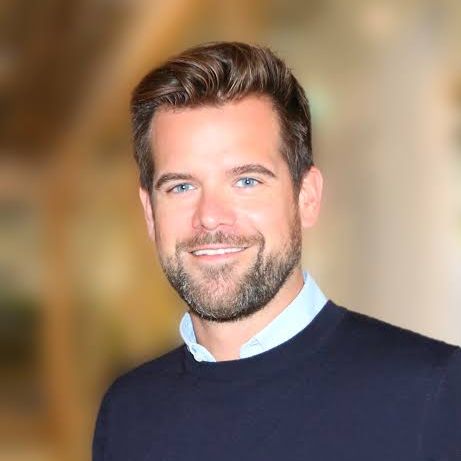
Founder & CEO, Upvisor
Gernot leads Upvisor, EIT’s international expansion partner for global markets such as Brazil and now India. Over 15+ years, Upvisor has supported 500+ expansion projects, and more than 2,500 founders have tested its Expansion Methodology. Its global footprint and network of local market experts connect startups with local ecosystems and international opportunities. Before Upvisor, Gernot helped scale TravelBird from around 100 to 750 employees across 17 markets. Today he is also a mentor, advisory board member and angel investor.
“India is where a large share of the next decade’s growth will be built: the fastest-growing major economy, the third-largest startup ecosystem in the world and, since January, an EU trade deal concluded after nearly two decades of talks. The door is opening for European founders, but it rewards those who test before they commit. These four sessions are how you do that.” Gernot Schwendtner

Co-founder, Global Launch Base · Founder & CEO, RapidPricer
Kiran is Upvisor’s partner and local market expert for India in this programme. He co-founded Global Launch Base, an India market-entry consultancy, and leads RapidPricer, an Amsterdam-based AI pricing company. He grew up in India and spent his 21-year career in California and Amsterdam, so he speaks to European founders on their terms and explains India without sugar-coating it. He has led more than 100 workshops, run India-entry programmes for European SMEs, supported EIT Urban Mobility’s Jumpstarter evaluations, and wrote The Expert Guide to Retail Pricing (Routledge, 2023). He also runs Aré Guḍi, a regenerative farm and agritech testbed in Karnataka.
“Most European founders don’t fail in India because they misread the market. They fail because they treat it as one market, move too fast on the wrong entry route, and burn eighteen months finding out. This programme is about getting those decisions right before you spend the money.” Kiran Gange
Discover how to expand your business and seize new market opportunities together with our experts.
Europe is one of the world’s leading destinations for research and innovation – and it has never been more open to global talent.
Through the Choose Europe for Science initiative, the EU is backing researchers with world-class funding, mobility support, and a research ecosystem built for international collaboration.
This webinar series is your practical, no-cost guide to making the most of it.
Europe is home to a dense network of world-class universities, research centres, and shared infrastructures — from particle accelerators and supercomputers to life-science facilities — that few individual institutions could ever build alone.
Collaboration across borders isn't the exception here; it's the default.
Far far away, behind the word mountains, far from the countries Vokalia and Consonantia, there live the blind texts. Separated they live in Bookmarksgrove right at the coast
Through the Choose Europe for Science initiative, launched in 2025, Europe has reaffirmed its commitment to open, independent research — backed by significant new investment and more than 100 national and regional schemes designed to attract, retain, and develop research talent from around the world.
Europe pairs opportunity with practical support: streamlined visa and residence pathways, help with contracts and working conditions, and services covering housing, healthcare, and childcare. Resources like EURAXESS exist specifically to help researchers and their families land smoothly.
Strong labour protections, robust public healthcare, generous parental support, and a real cultural emphasis on work-life balance mean Europe is a place to build not just a body of work, but a life.
For diaspora scientists and international collaborators, Europe offers a way to stay globally connected — a hub for transatlantic and worldwide partnerships rather than a place apart.
Researchers at every stage — from early-career to senior — plus research office and support staff, diaspora scientists, and startup founders. If you're curious about research, funding, or building a career in Europe, this series is for you. It's especially relevant to researchers based in the United States and beyond who are exploring European opportunities.
Nothing. The series is completely free to attend.
No. Each webinar stands on its own, so you can join the ones most relevant to you. That said, together they form a complete journey — from choosing Europe, to building a career, to relocating — so many attendees join all three. You register once for the whole series.
The series runs online across three dates: September 23, October 14, and November 4, 2026, each from 9:00 to 10:30 PDT (GMT-7). Joining details are sent to registrants.
Every session is recorded and shared with registrants, so you can watch on your own schedule. We'd still encourage you to join live if you can — the interactive Q&A is one of the most valuable parts.
Yes. Each 90-minute webinar includes a dedicated live Q&A where you can submit questions to the speakers and moderator.
Session 1 focuses on why Europe and the funding that makes it possible (Horizon Europe, ERC, MSCA). Session 2 covers career pathways, from academia to industry and startups. Session 3 is a practical guide to relocating — visas, housing, healthcare, and family support.
Not at all. The series is designed to be accessible whether you're completely new to European funding or already familiar and looking to go deeper.
Register once through the series sign-up form to secure your place for all three sessions and receive the recordings.
The Health not The Death is a fundamental human right. A healthy population is not to be seen as human and social capital, an input, or by-product, towards economic growth. Alongside a healthy and sustainable environment, a solidarity, a healthy population must be the ultimate goal especially nowadays in helping Ukrainian migrants with cancer and their families.
Solidarity in health is a cornerstone of EU health policy. There are wide disparities in many health outcomes across the region and those outcomes. The access rules dramatically affect healthcare systems which are at the forefront of the migrant way, the people who are searching for help and the way how we could enhance and support their healthier and wellbeing status.
In order to ensure their access to care and continued cure in need, the probability of receiving a timely diagnosis and of surviving differs greatly from country to country where they are now. There is lack of information, help and inequalities in access. People need help in navigating cancer knowledge, diagnostics, secondary monitoring and prevention, way of treatments, and care.
Shifting our mindset, supporting healthcare connectivity, removing inequalities overall across Europe is our mission and even more now in a time of crisis, helping the Ukrainian people dealing with cancer is a good place to begin this transformative revolution.
1) Whether we have a chance to foster more holistic and integrated approaches to receive information and care, by supporting coordination and maximising an enabling and health-enhancing effect of care across services from different countries?
2) Whether actions should address the social determinants of health, the countries where they are now, the health need which they have, the social and language barriers are the conditions which have to be taken into consideration in a coordinated manner?
How might we improve patients and /or people who seek healthcare support, access to healthcare services at an EU & the Member States Healthcare systems level? Especially in a time of crisis in Europe.
How might we support refugees fleeing from their countries by navigating them to medical centres to receive best available care?
Precision medicine aims to personalise care for every individual. Nongenomic and genomic determinants, combined with information from patient symptoms, clinical history, and lifestyle (nutrition, physical activity, stress etc.), can facilitate personalised diagnosis and prognostics. Yet this goal requires access to massive amounts of data which may come from different structured and unstructured sources; these can be our medical records, laboratory testing, a range of medical devices as well as from the patient himself. AI & ML can combine input from these multiple sources, analyse them and identify biomarkers that can support health professionals make more informed decisions. The convergence of precision medicine with the advanced AI capabilities will improve the ability to personalise care – improve diagnosis, risk prediction as well as therapy planning.
HCPs want to better predict treatment response, given uncertainty around which treatment to prescribe to which patient and when to prescribe. How do we risk assess the patients, match them with the right treatment (personalised). How can we transform the wealth of data and link it to the predictive nature of how the patient will respond?
Being diagnosed with cancer is overwhelming and comes as a blow. Patients may feel on a roller coaster of emotions—they are scared, lost & confused not knowing what to expect, who to refer to, what to do and how to tell their loved ones. They directly refer to “Dr. Google” to look for information about their disease, possible treatments, QoL strategies with the aim to have better understanding of their disease and learn how to better cope with their disease & treatment, yet information is not always valid, accessible, nor personalised or tailored to the patient’s status and needs therefore left with huge amounts of non-relevant information. Coming to the doctor, the physician’s time is limited and mostly focusing on the physical aspects of the disease & treatment, not leaving much time to ask questions nor discuss more holistic aspects of the disease such as emotional, psychological, social aspects. The patient (& caregiver in many cases) leaves the room with unanswered questions, doesn’t remember much of what has been said, and feels he is not heard, nor seen as a whole.
The need for navigating this journey along the emotional psychological stress is overwhelming & patients and their caregivers look for support (case manager/companion/partner) to help manage their disease holistically – starting from having clarity around their disease and treatment by having access to reliable and personalised information during their journey as well as having an integrated holistic care system , supporting them and their loved ones to navigate through the different aspects of their disease – medical, emotional, logistical, psychological, social, rights.
How can we support patients to navigate through the complexity of their disease and treatment ensuring they have validated holistic information about their disease journey & treatment and be empowered to effectively manage their care
As medical events pivoted from conference centres and meeting rooms to the virtual settings, learning opportunities continue. Lectures and presentations are translated to the new digital world, yet the ability to connect and network is relatively lost. Peer interaction is essential not only for information exchange but to share practical insights, allows consultation & in-person experience cross country and across borders leading to better disease management.
This peer-based learning/ consultation is highly valued amongst practising clinicians and was generally achieved when HCPs and KOLs met their peers in national & Intl conferences, group debates, advisory boards and even during quick corridor conversations. Attempting to replicate these in-person experiences into the digital space creates challenges and are not effective nor impactful as face-to-face engagements.
How might we improve HCP medical exchange enabling physicians to easily communicate, consult, exchange opinions leveraging individual experts & centres of excellence knowledge, experiences, and practices?
How can we leverage the technological expertise to allow HCPs to connect with leading experts across countries to get advice / counselling for their cases?
Application for 2022Calling2Scale is closed.
Interested in participating in the next cohort?
Email maayan.sharon@eithubisrael.eu
Connect & Experience offers more than training. The C&E community network is an active EU online and offline community offering easy access to opportunities, curated content, matchmaking, soft landing services, and support. The community provides a space for community builders from Europe and Horizon Europe associated countries to interact, share best practices, and collaborate to enhance your startup community.