A challenge-based programme supporting advanced European & Israeli startups in scaling solutions for flood risk reduction and emergency response through global partnerships, expert mentoring, and new market opportunities.
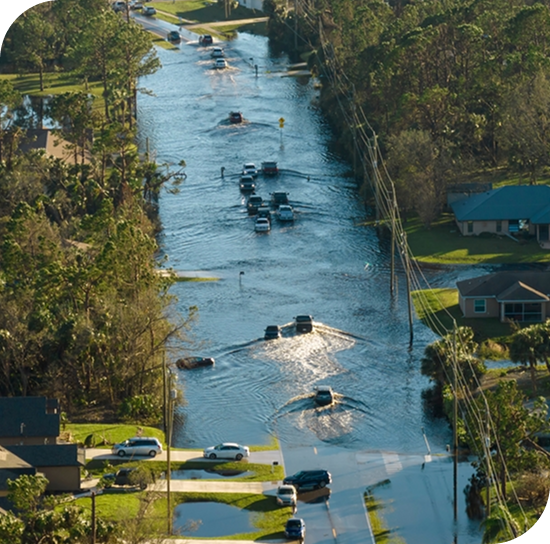
Floods events are a growing threat to lives, infrastructure, and ecosystems across Europe. Traditional responses are no longer enough. Tech solutions like AI forecasting and smart communication tools are key to improving how we predict, respond to, and recover from flood disasters.
Driving Real-World Impact Through Flood Management Challenges
Driving Real-World Impact Through Flood Management Challenges
Calling2Scale Floods is a challenge-based scaling programme for European & Israeli startups offering innovative solutions in flood prediction, emergency or crisis response, and resilience planning. Over a dynamic 2-month hybrid bootcamp, startups will work closely with the German waterboard Emschergenossenschaft (EG) and its network to tackle critical real-world challenges in the field.
The programme offers tailored mentorship, strategic collaboration opportunities, and global best practices, helping startups shape and refine their value proposition, access new markets, and accelerate commercial growth.
It’s your call to scale where innovation meets urgent need
EG is a joint entity formed in partnership with Lippeverband (LV), together comprising the EGLV water management association. Operating in the densely populated Ruhr region, EG oversees the Emscher River catchment, a tributary of the Rhine, along with its tributaries. It is responsible for managing 164 surface water pumping stations, 147 bridges, 22 retention basins, 117 km of dykes, 384 km of sewer networks, and five large wastewater treatment plants. One of EG’s main tasks is flood forecasting and management. In response to the devastating floods of 2021, EG implemented the Flood Roadmap Crisis in 2022 to improve extreme flood event management. EG is actively engaged in various innovative EU projects and initiatives in flood risk management, including close coordination with LV on AI-driven flood forecasting, enhancing early warning systems, and testing the implementation of web-based high-performance 2D hydraulic modelling.
Ecosystem Partners
The Challenges
Under conditions of uncertainty in forecasts, especially during extreme weather events like floods, decision-making processes can be challenged by slower information dissemination, coordination difficulties, and limited clarity, which may affect the efficiency of emergency responses. A key pain point lies in the limited ability to rapidly interpret and act on complex forecast data in a more localised and timely manner. Enhancing the clarity and timeliness of flood forecasts through the robust evaluation and communication of uncertainty inherent in ensemble flood forecasts can substantially improve situational awareness and bolster confidence in decision-making. This will allow EG, authorities, and communities to respond more decisively and quickly, bridging critical gaps in communication and preparedness.
From a technical perspective, addressing ensemble forecast uncertainty and enhancing localised information capabilities is expected to yield improved forecasting tools that not only enhance the anticipation of flood events and their impacts, but also support the timely and context-specific triggering of alerts that explicitly account for uncertainty. In a broader context, these advancements will contribute to the development of a better-prepared and more adaptive disaster management framework to protect lives and reduce damage during flood emergencies.
How can decision-making processes be enhanced under conditions of uncertainty, and how can more timely and localized triggering of alerts be established to enable and support effective and coordinated operational responses across agencies?
Relevant Technologies:
Ensemble forecast uncertainty analysis tools - Technologies that support the assessment of ensemble forecast uncertainty to improve the accuracy and timeliness of warning decisions. Solutions should align with local needs and build on existing ensemble data, including official forecasts from the German Weather Service. The methodology must be rigorous, incorporating past forecast performance to evaluate reliability or error rates, and should be accompanied by intuitive, decision-oriented visualisations.
AI-powered spatial data analysis - Solutions that analyse large-scale, operational spatio-temporal datasets from sensors and flood hazard models to generate highly localised and precise flood warnings.
AI-generated action recommendations - Tools that provide actionable guidance based on localised flood warnings, supported by Large Language Models (LLMs). These systems can offer interactive explanations to help users understand the rationale behind suggested emergency responses.
Enhanced flood forecasting platform - Upgrades to EG’s existing information system to integrate ensemble forecast uncertainty assessments and localised alert capabilities. The platform should feature intuitive visualisations, interoperable data exchange, and analytical tools tailored for experts, decision-makers, and responders. It must ensure top-level IT security and be accessible via both desktop and mobile devices for operational flexibility.
Real-time data integration from external sources - Technologies that ingest and harmonise data from weather services, satellite feeds, social media reports, and on-the-ground sensors to enrich situational awareness and refine forecasts.
Edge computing for faster decision-making - Systems that process flood data locally (e.g., at sensor or municipal levels) to reduce latency and enable rapid, location-specific alerts without reliance on central servers.
Human-in-the-loop decision systems - Interfaces or platforms that combine machine-generated recommendations with expert judgment, allowing decision-makers to adjust thresholds or scenarios based on local knowledge.
Training simulations and decision rehearsal tools - Software that helps authorities simulate extreme weather scenarios using real data, to improve preparedness and build confidence in using new decision-support technologies.
During previous flood events, the dissemination of information and warnings was often severely delayed. For example, the floods in Europe (07/2021) and Spain (10/2024) demonstrated the importance of immediate information, and rapid actions, and clear evacuation orders to prevent casualties.
As a German waterboard, EG is not responsible for warning and evacuating the population. This lies with the communes and counties. However, we do provide internal information to external authorities, including weather and water level prognosis for the area we manage.
How can we prepare and conduct the dissemination of information to both authorities and the public during an emergency or crisis, ensuring we reach as many people as possible and promptly, while maintaining clarity and barrier-free accessibility?
Relevant Technologies:
Web-based platforms – User-friendly websites that serve as central hubs for flood updates.
Social media and messenger services – Tools that leverage existing platforms for wide and fast distribution.
IoT-based alerts – Sensors and connected devices that trigger localised or automated warnings.
AI-powered messaging tools – Systems that can automatically generate and adjust emergency messages using artificial intelligence, depending on the situation and location.
Large Language Models (LLMs) – Like ChatGPT or similar tools, used to create understandable, translated, and accessible messages for diverse populations.
Accessibility-focused interfaces – Tech that makes sure alerts are clear and usable for people with disabilities, different languages, or limited tech access.
Multi-channel alert systems – Platforms that send alerts via SMS, apps, social media, public loudspeakers, etc., to increase the chance people receive them.
Decentralised or mesh communication networks – Systems that don’t rely on one central network and can still function if part of the infrastructure is down (e.g., after a storm)
Key Statistics
Global and European Impact of Flooding
35–40%
of all weather-related disaster events worldwide are associated with flood disasters. Observations show a rise in record-breaking rains and flood events in Europe and worldwide as the planet warms.
134%
increase in flood events globally since 2000. This means more communities are facing dangerous floods year after year.
8,000
people died in 2022 alone from flood disasters and around 57 million people were affected within 80 countries.
1.8 Billion
people, today and nearly one quarter of the world’s population, are directly exposed to significant flood risk
€30 Billion+
are estimated in Europe’s costs: The devastating July 2021 floods, in Europe causes this amount in damages in Germany alone— entire communities, roads, and utilities were wiped out
3X
Europeans exposed to flooding could triple by 2100, vs. today, as climate change drives up flood hazard and exposure
Resources: UN Office for Disaster Risk Reduction (UNDRR), World Meteorological Organisation/IPCC, Internal Displacement Monitoring Centre (IDMC), World Bank, Joint Research Centre & European Commission, Carbon Brief (Nature Climate Change study), and Deutsche Welle/IPCC analysis.
What Do We Offer?
Work With the EG Champion Team
EG’s Champions are the challenge owners in this programme, bringing extensive expertise in hydrological and hydrodynamic modelling, decision support systems, flood forecasting, and crisis management. They help shape the challenges and guide the process to ensure startup alignment with real operational needs and high-impact potential.
Challenge-Based Engagement
Work directly on defined, high-priority challenges identified by EG, giving your startup a focused path to relevance, product fit, and meaningful impact in the flood resilience domain.
Access to Expert Mentorship
Collaborate with specialists in emergency systems, data-driven decision-making, and public communication during crises. Our global mentors will help you adapt your solution to meet the real needs of agencies and local authorities operating under uncertainty.
Global Market Insights
Explore how leading flood-prone regions address critical gaps in alert systems and crisis communication. With the support of EG and global partners, you’ll gain actionable insights into operational needs, stakeholder coordination, and public engagement strategies.
Real-World Validation
Get the opportunity to present a Proof of Concept about your flood management solution in real operational environments with the practical partner EG and its networks. Demonstrate impact, gather critical feedback, and accelerate your path to market through high-relevance pilot settings.
Streamlined PoC Processes
Access the tools and support needed to efficiently implement proof-of-concept projects with public agencies and infrastructure stakeholders. Bypass bureaucratic hurdles and rapidly iterate your solution to meet pressing flood resilience and emergency response needs.
Who Should Apply
Do you tick most of the boxes?
Is your solution relevant to flood prediction, emergency or crisis communication, or resilience planning?
Do you have a working product ready for presenting or deployment?
Are you looking to scale into new markets and present a Proof of Concept about your solution with public agencies or infrastructure operators?
Are you a resident of the EU or legally registered in a country associated with Horizon Europe?
9, 13, 16, 20 Oct Ongoing startup interviews & assessment
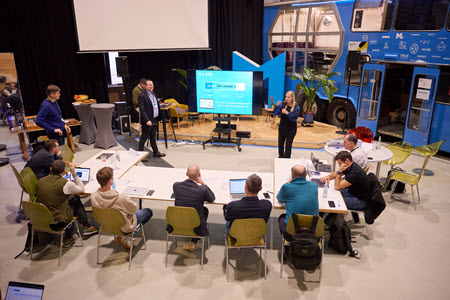
2-Month Bootcamp (4 sessions) & 1:1 Mentorship
Tailored support with expert guidance, hands-on workshops, and partner sessions to help startups strengthen their solutions, refine strategy, and accelerate market readinessRead More
Startup application deadline
Kick-off Meeting - Online session with selected startups to align expectations and launch the programme
PoC Design Lab A working session with EG and stakeholders to shape potential pilots and explore practical applications of startup solutions.
Application opens for startups
Startup application deadline
9, 13, 16, 20 Oct Ongoing startup interviews & assessment
Kick-off Meeting - Online session with selected startups to align expectations and launch the programme
2-Month Bootcamp (4 sessions) & 1:1 Mentorship
Tailored support with expert guidance, hands-on workshops, and partner sessions to help startups strengthen their solutions, refine strategy, and accelerate market readiness
PoC Design Lab
A working session with EG and stakeholders to shape potential pilots and explore practical applications of startup solutions.
Please note that the timeline is subject to change.
Mentors
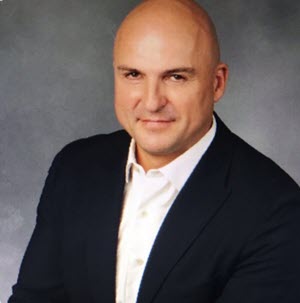
Roland W. Waniek
Managing Director, IKT – Institute for Underground Infrastructure
Expert in infrastructure and water economics as well a public utilities. He studied economics and went on to become a Research Fellow with RWI, a major German institute for economic research. In 1999 he was appointed Managing Director of IKT.
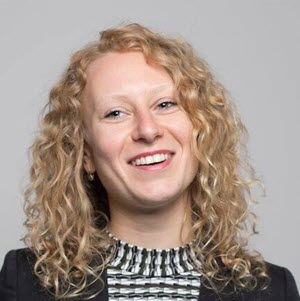
PhD in Atmospheric science. Master degree in Hydrology Head of the Israeli Meteorological Service.
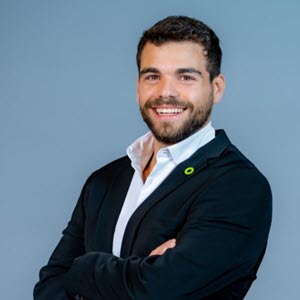
Dan Shaham
Founder & CEO, JADDE DisasterTech innovation hub
JADDE builds a global ecosystem of technologists, responders, and visionaries committed to reshaping disaster response. Its team and advisors bring decades of experience from the field, the lab, and the front lines of innovation.
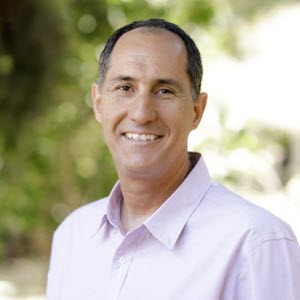
Limor Karvonen
M.P.H in Crisis, Disaster & Emergency Management
JADDE builds a global ecosystem of technologists, responders, and visionaries committed to reshaping disaster response. Its team and advisors bring decades of experience from the field, the lab, and the front lines of innovation.
What is Calling2Scale
Calling2Scale is EIT Hub Israel’s flagship programme for global startup expansion. It supports Growth-stage European and Israeli startups in entering new markets, building international partnerships, and accelerating growth. The programme runs across sectors, from health and energy to climate tech, agrifood, and mobility, and is co-led with strategic partners in markets Europe, Japan, Canada, and the US. Startups receive tailored matchmaking, expert mentoring, and support to secure pilots, collaborations, and funding.
9
Calling2Scale cohorts
100+
Startups supported
€92M
Direct investment attracted by supported startups and scaleups
35
Pilot projects / PoCs conducted
Alfredo Neila
Founder and CEO of plastic repair systems, Spain
“Being part of Calling2Scale has transformed Plastic Repair Systems. The insightful sessions led by EIT Global Outreach team of speakers and exposure to one of the hottest innovation ecosystems have significantly accelerated our growth and visibility plans. Thanks to the programme we have facilitated international connections and collaborations, essential for tackling the interconnected challenges of our world. It’s not just about scaling up; it’s about creating meaningful cross-border partnerships. I am proud to be a Calling2Scaler.”
Monika Tomecka
CEO of UFRACTION8, Poland
“Participating in the Calling2Scale programme has been a game-changer for UFraction8. The exposure to one of the hottest innovation ecosystems and the insightful sessions provided by EIT Global Outreach have significantly contributed to our plans for growth and visibility. The support received goes beyond financial assistance; it’s about building connections and fostering collaboration on an international level. The programme not only provides valuable opportunities for start-ups to scale up but also facilitates cross-border connections that are essential for addressing the complex challenges of our interconnected world.”
Matias Sigal
REplace Co-Founder & CEO
“Calling2Scale was an amazing experience for REplace. The mentorship on scaling strategy was exactly what we needed to prepare for our next growth phase. Highly recommend it.”
Mati Shani
Ceal Minerals Co-Founder & CEO
“Calling2Scale was an incredible experience — a chance to pitch our CDR technology to key players in the climate space. The mentorship and support throughout the programme truly elevated our journey. A great platform for visibility, connections, and impact.”
Henrik Pitz
COO & Co-Founder, CERPRO
“The Q2Scale program gave us valuable insights and support to better understand our market and how to successfully plan pilot projects or onboard new customers.”
Frequently Asked Questions
It’s a collection of common questions and clear answers related to a specific topic, product, or service
Are there any costs or fees involved?
Our exclusive bootcamp is fully funded by EIT Hub Israel and programme partners. There are no participation fees, but full commitment to the sessions is required.
What commitment is required from the startup?
Selected startups are expected to participate in all bootcamp sessions, mentoring calls, and partner engagements. The programme is designed to be fully online. Startups are required to report for up to three years after their participation on any collaborations established or investments attracted during or following the programme. This information is used for EU audit purposes only.
What will the mentoring process look like?
Each startup will be matched with experienced mentors from the flood resilience, emergency tech, and business oriented experts from EG and globally. Mentoring will include one-on-one sessions, office hours, and thematic group discussions to help you shape your solution for market validation and public sector collaboration.
What does the selection process look like?
After submitting your application, eligible startups will go through a two-step evaluation: an initial screening based on fit and readiness, followed by interviews with the programme team and challenge partners to assess potential for real-world deployment.
What are the assessment criteria?
Startups will be evaluated based on relevance to the defined challenges, technical maturity (working prototype or product), potential for real-world implementation, team strength, motivation, and bootcamp fit.
Do you have any questions? Get in touch with us at
Connect & Experience offers more than training. The C&E community network is an active EU online and offline community offering easy access to opportunities, curated content, matchmaking, soft landing services, and support. The community provides a space for community builders from Europe and Horizon Europe associated countries to interact, share best practices, and collaborate to enhance your startup community.
SHOW MORE
To read the full report, please enter your email.
*For the best experience, we highly recommend reading the report on your desktop and not your mobile.
To read the full report and receive a link to download it, please enter your email.
*For the best experience, we highly recommend reading the report on your desktop and not your mobile.
Access to Healthcare
The Health not The Death is a fundamental human right. A healthy population is not to be seen as human and social capital, an input, or by-product, towards economic growth. Alongside a healthy and sustainable environment, a solidarity, a healthy population must be the ultimate goal especially nowadays in helping Ukrainian migrants with cancer and their families.
Solidarity in health is a cornerstone of EU health policy. There are wide disparities in many health outcomes across the region and those outcomes. The access rules dramatically affect healthcare systems which are at the forefront of the migrant way, the people who are searching for help and the way how we could enhance and support their healthier and wellbeing status.
In order to ensure their access to care and continued cure in need, the probability of receiving a timely diagnosis and of surviving differs greatly from country to country where they are now. There is lack of information, help and inequalities in access. People need help in navigating cancer knowledge, diagnostics, secondary monitoring and prevention, way of treatments, and care.
Shifting our mindset, supporting healthcare connectivity, removing inequalities overall across Europe is our mission and even more now in a time of crisis, helping the Ukrainian people dealing with cancer is a good place to begin this transformative revolution.
1)Whether we have a chance to foster more holistic and integrated approaches to receive information and care, by supporting coordination and maximising an enabling and health-enhancing effect of care across services from different countries?
2) Whether actions should address the social determinants of health, the countries where they are now, the health need which they have, the social and language barriers are the conditions which have to be taken into consideration in a coordinated manner?
How might we improve patients and /or people who seek healthcare support, access to healthcare services at an EU & the Member States Healthcare systems level? Especially in a time of crisis in Europe.
How might we support refugees fleeing from their countries by navigating them to medical centres to receive best available care?
SHOW MORE
Predictive Treatment
Precision medicine aims to personalise care for every individual. Nongenomic and genomic determinants, combined with information from patient symptoms, clinical history, and lifestyle (nutrition, physical activity, stress etc.), can facilitate personalised diagnosis and prognostics. Yet this goal requires access to massive amounts of data which may come from different structured and unstructured sources; these can be our medical records, laboratory testing, a range of medical devices as well as from the patient himself. AI & ML can combine input from these multiple sources, analyse them and identify biomarkers that can support health professionals make more informed decisions. The convergence of precision medicine with the advanced AI capabilities will improve the ability to personalise care – improve diagnosis, risk prediction as well as therapy planning.
HCPs want to better predict treatment response, given uncertainty around which treatment to prescribe to which patient and when to prescribe. How do we risk assess the patients, match them with the right treatment (personalised). How can we transform the wealth of data and link it to the predictive nature of how the patient will respond?
SHOW MORE
Patient Journey Navigation
Being diagnosed with cancer is overwhelming and comes as a blow. Patients may feel on a roller coaster of emotions—they are scared, lost & confused not knowing what to expect, who to refer to, what to do and how to tell their loved ones. They directly refer to “Dr. Google” to look for information about their disease, possible treatments, QoL strategies with the aim to have better understanding of their disease and learn how to better cope with their disease & treatment, yet information is not always valid, accessible, nor personalised or tailored to the patient’s status and needs therefore left with huge amounts of non-relevant information. Coming to the doctor, the physician’s time is limited and mostly focusing on the physical aspects of the disease & treatment, not leaving much time to ask questions nor discuss more holistic aspects of the disease such as emotional, psychological, social aspects. The patient (& caregiver in many cases) leaves the room with unanswered questions, doesn’t remember much of what has been said, and feels he is not heard, nor seen as a whole.
The need for navigating this journey along the emotional psychological stress is overwhelming & patients and their caregivers look for support (case manager/companion/partner) to help manage their disease holistically – starting from having clarity around their disease and treatment by having access to reliable and personalised information during their journey as well as having an integrated holistic care system , supporting them and their loved ones to navigate through the different aspects of their disease – medical, emotional, logistical, psychological, social, rights.
How can we support patients to navigate through the complexity of their disease and treatment ensuring they have validated holistic information about their disease journey & treatment and be empowered to effectively manage their care
SHOW MORE
Peer-to-Peer Medical Exchange
As medical events pivoted from conference centres and meeting rooms to the virtual settings, learning opportunities continue. Lectures and presentations are translated to the new digital world, yet the ability to connect and network is relatively lost. Peer interaction is essential not only for information exchange but to share practical insights, allows consultation & in-person experience cross country and across borders leading to better disease management.
This peer-based learning/ consultation is highly valued amongst practising clinicians and was generally achieved when HCPs and KOLs met their peers in national & Intl conferences, group debates, advisory boards and even during quick corridor conversations. Attempting to replicate these in-person experiences into the digital space creates challenges and are not effective nor impactful as face-to-face engagements.
How might we improve HCP medical exchange enabling physicians to easily communicate, consult, exchange opinions leveraging individual experts & centres of excellence knowledge, experiences, and practices?
How can we leverage the technological expertise to allow HCPs to connect with leading experts across countries to get advice / counselling for their cases?
SHOW MORE
Application for 2022Calling2Scale is closed. Interested in participating in the next cohort? Email maayan.sharon@eithubisrael.eu











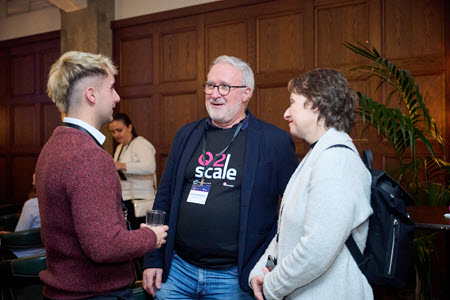
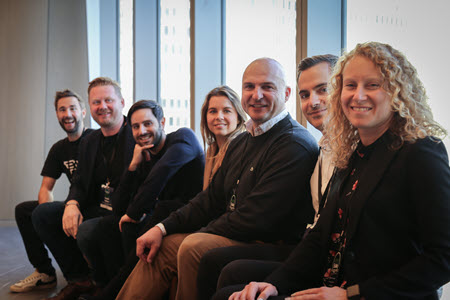
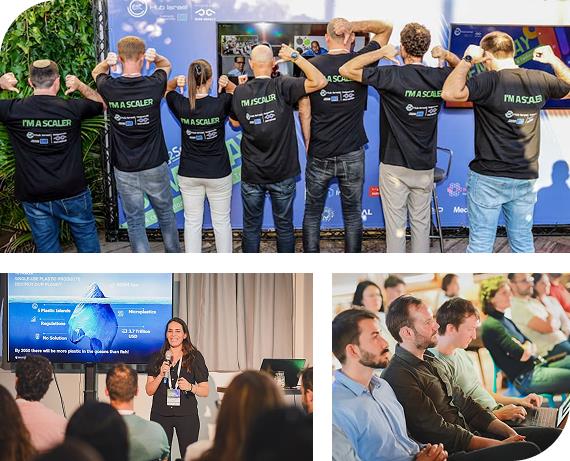


Connect & Experience offers more than training. The C&E community network is an active EU online and offline community offering easy access to opportunities, curated content, matchmaking, soft landing services, and support. The community provides a space for community builders from Europe and Horizon Europe associated countries to interact, share best practices, and collaborate to enhance your startup community.